by Ken Hamrick
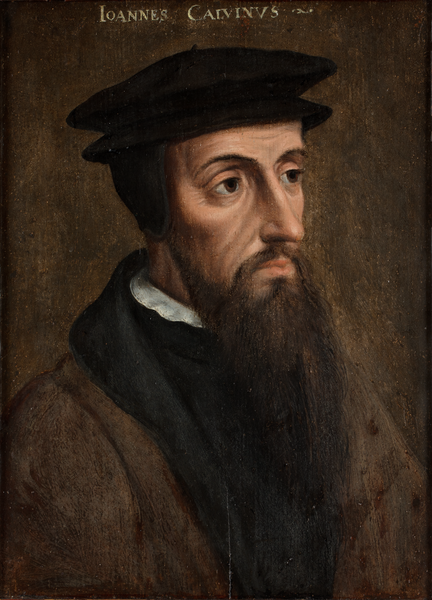

John Calvin devoted an entire chapter of his Institutes[1] to refuting Andreas Osiander.[2] Osiander, a Lutheran theologian and professor at Königsberg University, stirred up quite a controversy in the 1550’s by teaching that men are justified neither by “mere imputation” nor by the human righteousness of Christ, but only by His “essential” (divine) righteousness, which becomes ours through a substantial union with the divine nature.[3] Calvin calls this a “monstrosity” and a “delerious dream”[4] and has much to say about it.
Calvin states, “[…]a man will be justified by faith when, excluded from the righteousness of works, he by faith lays hold of the righteousness of Christ, and clothed in it appears in the sight of God not as a sinner, but as righteous.” As a proponent of the consistent Realist view,[5] I must point out that we are clothed not merely with the righteousness of Christ, but with Christ Himself (Rom. 13:14). Realism sees the need for justice and moral union to be grounded in a real union of being. Osiander seems to have had this truth in view, but missed the mark badly by discounting Christ’s human righteousness and denying the unity of Christ’s natures in redeeming us.
Continue reading “A Realist’s Review of Calvin on Osiander” The forgotten Realist