
The Image of God

by Ken Hamrick

Of all the creatures. Man alone is a spiritual being. Man and all other creatures have bodies, but only man has a spirit. It is significant that God, inspiring His inerrant, written word, chose to call the immaterial nature in man a spirit, which is the same word He chose to describe His own nature –John 4:24, “God is Spirit, and they that worship Him must worship Him in spirit and in truth.” Every functional similarity of God in man that has been labeled as the image of God, such as man’s moral nature, his relationality, his dominion over the other creatures, and his reason and rationality, his personhood, etc., are only possible because man is a spiritual being. Without his own spirit, man could function in none of these ways. Because man is a spiritual being, he is a person. Only spiritual beings are persons. Animals without spirits can never be persons and men can never lose their personhood. Men are innately moral beings because they are spiritual beings.

There is another aspect of the image of God to be considered. There is a real sense in which what we gain in Christ we lost in Adam. We are spiritually resurrected—brought to life spiritually—when we are saved by Christ. Prior to salvation, we were spiritually dead—alienated from God and without the Spirit of God inside us. God sends the Spirit of His Son into our hearts, crying, ‘Abba! Father!’ I suggest that Adam was created not only as a spiritual being, but also in spiritual union with the Holy Spirit inside him. As he chose to sin, the Holy Spirit left him and he spiritually died. Spiritual death is disunion with the Spirit of God who is the only Source of spiritual life.

Continue reading “The Image of God”
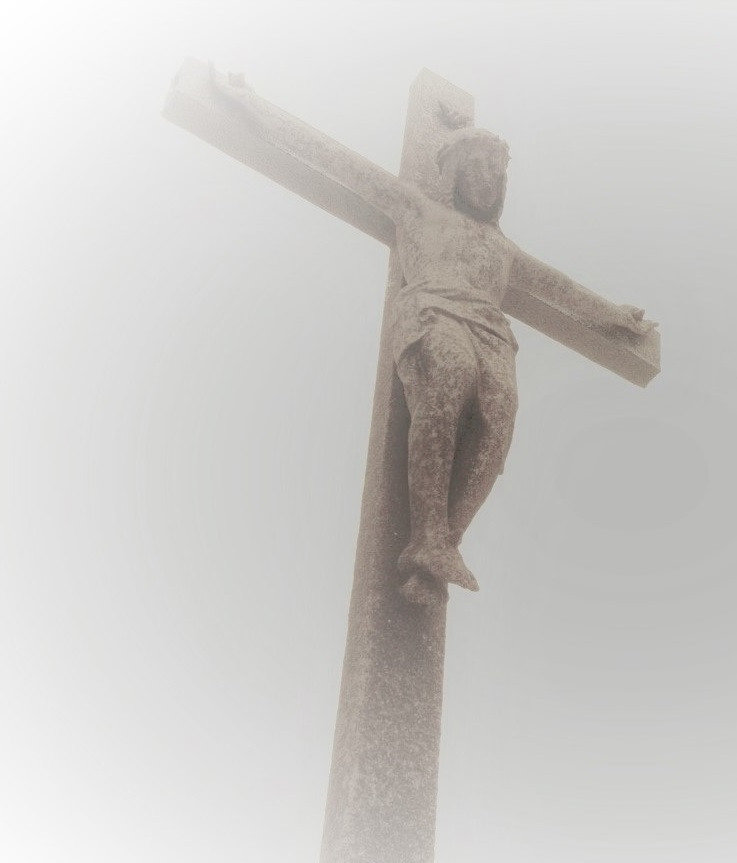

It’s Time for New Thinking on Atonement, Part 8: Realistic Substitution

This eight-part series introduces the new perspective of Realistic Substitution, which unties the knots and answers the questions that previous theories could not. It is the ancient Realistic view of Adam further developed and applied to Christ.

Leon Morris, in The Cross in the New Testament, was not optimistic regarding the possibility of a “full and final theory of atonement:”

…Our survey of the doctrine throughout the New Testament has uncovered a bewildering variety of ways of looking at Christ’s work. Redemption, for example, is a figure derived from the slave market or the freeing of prisoners of war. It has to do with setting the captive free on payment of the price. Justification is a legal metaphor. It interprets salvation through the law court and sees it as a verdict of acquittal. Reconciliation refers to the making up after a quarrel, the doing away of a state of hostilities. Propitiation has to do with anger. It reminds us of the wrath of God exercised towards every evil thing and also of the fact that Christ has removed that wrath. How are these figures to be gathered together under one theory? It cannot be done. […The] mind of man is not able to comprehend all the various facets of New Testament teaching on the atonement simultaneously. […The] fact is that it is too great in extent and too complex in character for us to comprehend it all in one theory…[47]

Continue reading “It’s Time for New Thinking on Atonement, Part 8: Realistic Substitution”

It’s Time for New Thinking on Atonement, Part 7: Traducianism

This eight-part series introduces the new perspective of Realistic Substitution, which unties the knots and answers the questions that previous theories could not. It is the ancient Realistic view of Adam further developed and applied to Christ.

Traducianism is the belief that the immaterial nature (the spirit or soul) is propagated from one or both parents. Creationism is the only Christian alternative, the belief that the spirit is created out of nothing.

While one may hold an implicitly realistic view without affirming traducianism, (preferring to leave it to mystery), it is inescapably implied. A participative union implies common being in singularity of origin, and a propagation of individuals out of that common being. It is my contention that the biblical case for traducianism is strong, and it should not be avoided, as it sheds light on the Adam-Christ parallel. While no explanation of traducianism is without mystery, neither is the creationist view without equal mystery, since it is as difficult a problem to view God creating morally corrupt souls out of nothing as it is to view Him creating them out of the parents.

Continue reading “It’s Time for New Thinking on Atonement, Part 7: Traducianism”

It’s Time for New Thinking on Atonement, Part 6: The Realistic View of Adam

This eight-part series introduces the new perspective of Realistic Substitution, which unties the knots and answers the questions that previous theories could not. It is the ancient Realistic view of Adam further developed and applied to Christ.

The parallel between Adam and Christ is striking, as evident in Rom. 5:12-21. Inadequacies in our understanding of how Adam’s sin ruined us may impede our understanding of how Christ saves us. But, if we find new depth in our view of Adam, we may find new depth in our understanding of the cross.

We’re all born sinners, spiritually dead, mortal, subject to the pains and evils of this world. But, why? How can God hold us responsible for what some man did six thousand years ago? Why didn’t we get the same chance he did, starting life in a perfect world with an unfallen nature? You may say that life isn’t fair, but even that fact is a consequence of Adam’s sin alone. Evangelicals (Baptists included) have generally answered these questions in one of two ways.

Continue reading “It’s Time for New Thinking on Atonement, Part 6: The Realistic View of Adam”