by Ken Hamrick
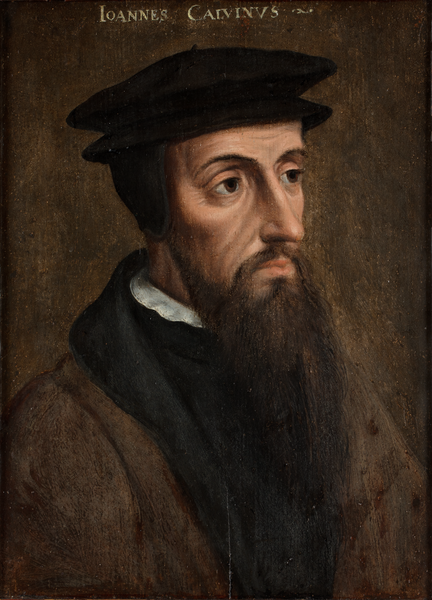

John Calvin devoted an entire chapter of his Institutes[1] to refuting Andreas Osiander.[2] Osiander, a Lutheran theologian and professor at Königsberg University, stirred up quite a controversy in the 1550’s by teaching that men are justified neither by “mere imputation” nor by the human righteousness of Christ, but only by His “essential” (divine) righteousness, which becomes ours through a substantial union with the divine nature.[3] Calvin calls this a “monstrosity” and a “delerious dream”[4] and has much to say about it.
Calvin states, “[…]a man will be justified by faith when, excluded from the righteousness of works, he by faith lays hold of the righteousness of Christ, and clothed in it appears in the sight of God not as a sinner, but as righteous.” As a proponent of the consistent Realist view,[5] I must point out that we are clothed not merely with the righteousness of Christ, but with Christ Himself (Rom. 13:14). Realism sees the need for justice and moral union to be grounded in a real union of being. Osiander seems to have had this truth in view, but missed the mark badly by discounting Christ’s human righteousness and denying the unity of Christ’s natures in redeeming us.
Unfortunately, the consistent Realist view is commonly portrayed by opponents as having already been rejected by the Church it its rejection of Osiander–and his error is erroneously portrayed as justification by union with Christ’s life in lieu of imputation. An example of such a mischaracterization is found in Camden Bucey’s statement in a Reformed Forum podcast in 2012 (bold mine):
And another issue—problem—we have with justification comes in the form of the New Perspective on Paul and there we end up where certain versions of the doctrine of union with Christ can basically trump everything else. Sometimes it looks very similar to what we get with Osiander. But you can end up with a justification that is given based on inclusion into the group as the church—or in the case of Osiander that your justification is on the basis of having Christ’s righteousness by virtue of being bound up with His life rather than the imputed righteousness of Christ alone which is the forensic declaration—a forensic transaction so to speak.[6]
Part of the misunderstanding comes from the term, impute. It is usually understood by Representationists (the main opponents to Realism) to mean the transfer of moral status from one who earned that status to those who did not earn it–a reckoning of that status to their account as if they had earned it. Realists insist that this is only a secondary usage, and that the primary usage and meaning is to reckon things as they are in reality. God imputed Adam’s sin first to Adam because it belonged to him, and God imputed the righteousness of Christ first to Christ because God accounted to Him what was His.
As humans, we need a human righteousness. We are not divine, so a divine righteousness cannot be applied to our nature and does not fit our need when we are to be judged for all our human deeds. Osiander was wrong. Furthermore, in addition to the Law’s requirement for lifelong, perfect human deeds and heart attitudes, the Law also requires us as guilty humans to have suffered the complete wrath of God against sin. Christ became incarnate not only to suffer and die in our place as a man, but also, to live in our place in perfect righteousness as a man.
Realists contend that God imputes the sin of Adam to us in this primary sense of the term, because his sin belongs to us by our spiritual union in him and–as the early Reformers called it–our sin of participation. In a similar way, God imputes the righteousness of Christ to us because He “sends the Spirit of His Son into our hearts,” joining us in spiritual union so that the two become one new man in Christ. Rather than God imputing the righteousness of one person to a different person, God makes the two into one so that the believer now shares in Christ’s identity at the bar of judgment and has a rightful ownership of all of Christ’s human deeds–and God imputes by accounting what is rightfully ours as ours (the righteousness of Christ). Therefore, the consistent Realist view does not deny that Christ’s righteousness is “forensically” imputed to us for our justification. We simply recognize the substance and ground of that imputation that goes unnoticed by Representationists.
Christ’s divine righteousness, which comes from His divine nature, had to be manifested and expressed in human works, deeds and heart attitudes in a real, daily, human life lived out on earth as a man. Only when His righteousness is worked out in this way by living as a man and making human, moral choices and performing human, righteous acts, etc., can He earn the kind of obedience that will fulfill the Law’s requirements on us. And only when He suffers as a man and dies under our penalty can His suffering answer the Law’s requirements on us. It is His Person who has done all these things, and to that Person inseparably belongs both His divinity and His humanity. He is the Mediator between God and man, and we need all that He is for our salvation. On this, too, Osiander was wrong.
Calvin states:
To justify, therefore, is nothing else than to acquit from the charge of guilt, as if innocence were proved. Hence, when God justifies us through the intercession of Christ, he does not acquit us on a proof of our own innocence, but by an imputation of righteousness, so that though not righteous in ourselves, we are deemed righteous in Christ.[7]
Christ does not intercede for us in heaven apart from us; but, He intercedes from within us–standing in us on earth and yet reaching to the heavens. His intercession there is grounded on His presence in us here. Only by being in Christ are we truly righteous, and only by Christ being in us are we truly in Christ.
Calvin states of Osiander:
He, indeed, heaps together many passages of Scripture showing that Christ is one with us, and we likewise one with him, a point which needs no proof; but he entangles himself by not attending to the bond of this unity. The explanation of all difficulties is easy to us, who hold that we are united to Christ by the secret agency of his Spirit, but he had formed some idea akin to that of the Manichees, desiring to transfuse the divine essence into men. [fn: “–that is, that the soul is of the essence of God.”] […] He says, that we are one with Christ. This we admit, but still we deny that the essence of Christ is confounded with ours. Then we say that he absurdly endeavors to support his delusions by means of this principle: that Christ is our righteousness, because he is the eternal God, the fountain of righteousness, the very righteousness of God. […] But although he pretends that, by the term essential righteousness, he merely means to oppose the sentiment that we are reputed righteous on account of Christ, he however clearly shows, that not contented with that righteousness, which was procured for us by the obedience and sacrificial death of Christ, he maintains that we are substantially righteous in God by an infused essence as well as quality.[8]
The obedience and sacrificial death of Christ were righteous acts in time performed as a man and not part of the eternal righteousness of the essence of God. The eternal righteousness was the source for all of Christ’s righteous human acts, but Osiander was severely mistaken to think that the human acts could be bypassed or discarded due to our supposed need for only the eternal, divine righteousness of Christ. Calvin is correct in his critique of such a poor theology. It is Osiander’s misguided focus on our supposed need for the divine righteousness that sent him down the disastrous path of transfusing the divine essence into men and confounding that essence with ours.
We are spiritually joined to Christ, and that is through the Holy Spirit’s indwelling; but our spirit and His are not confounded. Nevertheless, we are made one with a union of being that results in a new man who has ownership of all of Christ’s human deeds–not a co-mingling or confounding, but a joint ownership and joint identity as a single human life. Once we are joined to Christ, viewing us in distinction from Him is within the purview of God’s knowledge, but it is not within the purview of justice. The only righteousness by which we are righteous is the obedience and sacrificial death of Jesus, and not any righteousness of our own when viewed in distinction from Him; but justice no longer has a warrant or license to view us in any way that is distinct from Him. Justice must view us according to reality, and we are joined as one in that reality–and ever shall we be.
Calvin states:
Had he only said, that Christ by justifying us becomes ours by an essential union, and that he is our head not only insofar as he is man, but that as the essence of the divine nature is diffused into us, he might indulge his dreams with less harm, and, perhaps, it were less necessary to contest the matter with him; but since this principle is like a cuttlefish, which, by the ejection of dark and inky blood, conceals its many tails, if we would not knowingly and willingly allow ourselves to be robbed of that righteousness which alone gives us full assurance of our salvation, we must strenuously resist.[9]
Osiander’s unique and erroneous view of union with Christ was not his only problem. Heresies tend to multiply as they are developed and their ramifications considered. Osiander also confused the meaning of justification and imputed righteousness with being made just and the righteousness to which union with the divine essence inspires us. Calvin continues:
For, in the whole of this discussion, the noun righteousness and the verb to justify are extended by Osiander to two parts; to be justified being not only to be reconciled to God by a free pardon, but also to be made just; and righteousness being not a free imputation, but the holiness and integrity which the divine essence dwelling in us inspires. And he vehemently asserts […] that Christ is himself our righteousness, not insofar as he, by expiating sins, appeased the Father, but because he is the eternal God and life.[10]
The divine essence alone, in and of itself without the fait accompli of Christ’s human life and atoning death, if it is united with us, cannot bring righteousness to us. This is why the Old Testament saints had their sins “passed over…” “…in… divine forbearance” rather than having them remitted in the same way that justification after the cross provides for us. Their sins were forgiven but justice remained to be satisfied–Christ still needed to be incarnated, live as a righteous man and die a sacrificial death. Until that was accomplished, any union between the Holy Spirit and men brought only the divine nature and was without ownership of the human nature of Christ and all of the human experiences of His life and death. Without these, there was no realistic union of identity possible, and so there was no righteousness and atonement that could be savingly applied by the Holy Spirit to a sinner’s life through the joint ownership that would result from a union of two human lives (creating the new man in Christ).
But, make no mistake, Realism agrees that to justify is to forensically declare to be righteous. But Realism posits that the ground of this forensic declaration is found in the concrete reality of the union of Christ and the believer (whether at present or at a point in the future as certain as God’s immutability). But if it is grounded on a future reality, then it does not actually become reality until that future reality becomes a present reality; nonetheless, it is as certain as the God who guarantees it. As for justification making us righteous, it is strictly, precisely and only the righteousness that Christ Jesus lived out and earned in His life as a man, fulfilling all the Law’s requirements in heart and deeds. This is the only righteousness that accrues to our account at justification and afterward. Whatever righteousness grows out of us due to our union with Christ and the indwelling Holy Spirit is a sanctifying effect, but is never perfect in this life. Osiander was wrong again and again; but his error is not the error of proper, biblical Realism–and that which is sound and biblical and illuminating in Realism is utterly missing from the Federal or Covenant theology of our day (except for the worn shadows of the ancient realistic terms whose use is still cherished but whose meaning is long forgotten).
Calvin states:
Osiander will have it, that as Christ is God and man, he was made our righteousness in respect not of his human but of his divine nature.[11]
Calvin answers well, in the next section:
For although Christ could neither purify our souls by his own blood, nor appease the Father by his sacrifice, nor acquit us from the charge of guilt, nor, in short, perform the office of priest, unless he had been very God, because no human ability was equal to such a burden, it is however certain, that he performed all these things in his human nature. If it is asked, in what way we are justified? Paul answers, by the obedience of Christ. Did he obey in any other way than by assuming the form of a servant? We infer, therefore, that righteousness was manifested to us in his flesh.[12]
If we, as humans, had any righteousness, what kind of righteousness would it be? Would it be divine or human? It would be human because we are human. So then, as sinners, what kind of righteousness are we lacking? We are lacking the kind of righteousness that would be expected of us by the God who created us. He created us human, and He expects us to have human righteousness. If we lack that human righteousness, then we cannot expect the blessing of a holy God or to gain entrance to His heaven. But we could no more gain a divine righteousness–even with the help and intention of God to give it to us–than we could gain His omnipresence or His omnipotence or His omniscience. We are mere men, so we need a mere human righteousness--the kind earned by a man named Jesus. Osiander failed to understand this; but any who think the Realistic view falls in with Osiander’s error fail as badly as Osiander in their misunderstanding.
Calvin states:
[…] I acknowledge that we are devoid of this incomparable gift until Christ become ours. Therefore, to that union of the head and members, the residence of Christ in our hearts, in fine, the mystical union, we assign the highest rank, Christ when he becomes ours making us partners with him in the gifts with which he was endued. Hence we do not view him as at a distance and without us, but as we have put him on, and been engrafted into his body, he deigns to make us one with himself, and, therefore, we glory in having a fellowship of righteousness with him. This disposes of Osiander’s calumny, that we regard faith as righteousness […][13]
The mystical union makes us more than mere “partners with him in the gifts with which he was endued.” We are made one with Him. Having been “engrafted into his body,” we share in more than a “fellowship of righteousness with him”–we share in His righteousness as if it were earned by us–a full “proprietary title” to the ownership of His human deeds–as if we were He. In another Reformed Forum podcast, Dr. Lane Tipton says,
[The] forensic is always a function of the solidaric [… We] receive forensic benefits. What do forensic benefits do? They change your status. Justification involves remission of sins and reckoning of righteous[ness]–a change in judicial status. Adoption involves a change in your filial status–you become a child of God. And whether we’re dealing with predestinarian union and all the benefits that God has decreed to us, past historical union–all the benefits Christ has accomplished on our behalf in His death and resurrection by which He is justified, adopted, sanctified and glorified, or whether we’re talking about the Ordo Salutis and the application of those redemptive benefits to us, the forensic is always a function of the solidaric, and never precedes or comes before it. […] If we want to talk about the gospel proclaimed, it is you in Christ, represented by Christ in the past historical event of His death, by which your sins are pardoned–the basis for pardon is given, the basis for the mortification of sin’s power over you is given. Romans 3:24-25; Romans 6:5-6. [… The] forensic does not exist apart from or prior to union with a federal head. So if we’re asking the question, what grounds the Ordo Salutis and the justification that we have by virtue of Spirit-wrought faith-union with Christ realized in our effectual calling, what grounds that is the past historical death and resurrection of Jesus Christ, by which the basis for our pardoning of sin and the mortification of the old man is provided in an objective, concrete, redemptive-historical way in the Historia Salutis; so that the forensic reality of Jesus’ death as a propitiation and expiation and redemption and reconciliation–that provides the Historia Salutis ground (forensic ground) for what we receive in the Ordo Salutis. […] What I’m concerned about is positing that some forensic feature like declaration of justification precedes and grounds the Ordo Salutis, because justification of sinners is always and only by virtue of Spirit-wrought faith-union.[14]
In spite of the realistic sound of Dr. Tipton’s arguments, he is, in fact, not an admitted Realist. He may describe “union with a federal head” as “solidaric,” and use realistic arguments such as, “the forensic is always a function of the solidaric,” which is true enough in a realistic sense, but all the substance is missing from the meaning of “solidaric” when a nominalistic, representationism has commandeered realistic terms and even realistic arguments, but intends nothing realistic by them. For if Dr. Tipton really has a substantial union in mind for the “solidaric” union with Christ, then he cannot avoid the same degree of solidarity in the union with Adam. He would have a foot in the door of Realism, and if that’s the case, I invite him to step on through.
Samuel J. Baird, pastor of the Presbyterian Church, Woodbury, NJ, from 1849-1865, and author of The Elohim Revealed, saw that “a real inbeing” in Christ was the ground of imputed righteousness, just as “a real inbeing” in Adam was the ground of imputed sin. He also understood why the idea of a shared identity through spiritual union with Christ is so consistently ignored. He states:
If the imputation of Christ’s righteousness be founded in a real inbeing in him, wrought by the uniting power of his Spirit in regeneration,—if it is thus that we are brought within the provisions of the covenant of grace to our justification, it follows, (we will venture the word,) incontestably, that the imputation to us of Adam’s sin, is founded in a real inbeing in him, by natural generation, by virtue of which we come under the provisions of the covenant of works, to our condemnation. But this, according to our reviewer [Charles Hodge], is “simply a physiological theory,” involving “a mysterious identity,” which he cannot admit. Hence the necessity of ignoring the doctrine, in its relation to justification.[15]
Baird also states:
We have seen the zeal with which the position is maintained, that the doctrine of imputation “does not include the idea of a mysterious identity of Adam and his race.” By parity of reason it should not include the idea of a mysterious identity between Christ and his people. And accordingly, in the system presented in the review [by Charles Hodge, of Baird’s book, The Elohim Revealed], the relation which in the Scriptures and our standards, the mystical union sustains to justification is ignored, and the doctrine represented as complete without it, and to the exclusion of it. “Christ in the covenant of redemption, is constituted the head and representative of his people; and, in virtue of this federal union, and agreeably to the terms of the eternal covenant, they are regarded and treated as having done what he did and suffered what he suffered in their name and in their behalf.” According to our understanding of the Scriptures, it was provided in the eternal covenant that the elect should be actually ingrafted into Christ by his Spirit, and their acceptance and justification is by virtue of this their actual union to him. “This principle is not to be so understood as though the character thus conveyed were the meritorious cause of the relations predicated; as if the believer were justified by the personal righteousness which he receives through the power of Christ’s Spirit given to him. On the contrary, the union, which is constituted by virtue of the transmission of the nature, itself conveys a proprietary title in the moral and legal relations of the head; whilst the efficient principle which thus unites, is also fruitful in effects appropriate to the nature whence it flows. Thus, the sin of Adam, and the righteousness of Christ are severally imputed to their seed, by virtue of the union, constituted in the one case by the principle of natural generation, and in the other, by ‘the Spirit of life in Christ Jesus,’ the Holy Spirit, the principle of regeneration. At the same time, the power by which the union is in these cases severally wrought produces likeness to the head.” [The Elohim Revealed, p. 317][16]
When Christ spiritually indwells me and we become one, it is–in the eyes of justice which sees all things according to substantial reality–as if it had been me who was taken outside Jerusalem two thousand years ago and crucified by Roman soldiers and bore the full weight of the complete wrath of God against sin. It was not me. It was Christ. But who I now am includes Him who accomplished all those things necessary for my salvation–and accomplished them in a nature fitting for union with my own. What a marvelous plan and a wonderful redemption! Osiander was wrong, but Realism is right.
[1] John Calvin, Institutes of the Christian Religion (Peabody: Hendrickson, 2021), Translated by Henry Beveridge.
[2] https://en.wikipedia.org/wiki/Andreas_Osiander
[3] Timothy J. Wengert, Defending Faith (Tübingen: Mohr Siebeck, 2012), p. 10.
[4] Calvin, p. 477.
[5] See “What is Realism in Plain Language?” at https://theforgottenrealist.blog/2023/04/12/what-is-realism-in-plain-language/ , “The Role of the Holy Spirit in Justification,” at https://theforgottenrealist.blog/2018/12/22/the-role-of-the-holy-spirit-in-justification/ , “A Strong Argument for Traducianism,” at https://theforgottenrealist.blog/2020/04/02/a-strong-argument-for-traducianism/ and “It’s Time for New Thinking on Atonement,” at https://theforgottenrealist.blog/tag/series-its-time-for-new-thinking-on-atonement/ .
[6] https://reformedforum.org/podcasts/ctc207/
[7] Calvin, p. 476.
[8] Ibid., pp. 477-478.
[9] Ibid., p. 478.
[10] Ibid.
[11] Ibid., p. 480.
[12] Ibid.
[13] Ibid., pp. 481-482.
[14] Justification and Union with Christ – Reformed Forum
[15] Samuel J. Baird, A Rejoinder to The Princeton Review, upon The Elohim Revealed, (Phila.: Joseph M. Wilson, 1860), p. 34. Baird also authored The First Adam and the Second: The Elohim Revealed in the Creation and Redemption of Man, (Phila.: Parry & McMillan, 1860).
[16] Ibid., pp. 32-33.

 The forgotten Realist